

How to Design Immersive Escape Rooms: 2026 Guide
Table of Contents
- Start With a Narrative Arc, Not a Theme
- Escape Room Puzzle Design Best Practices for Immersive Rooms
- How to Write an Escape Room Script That Drives Player Agency
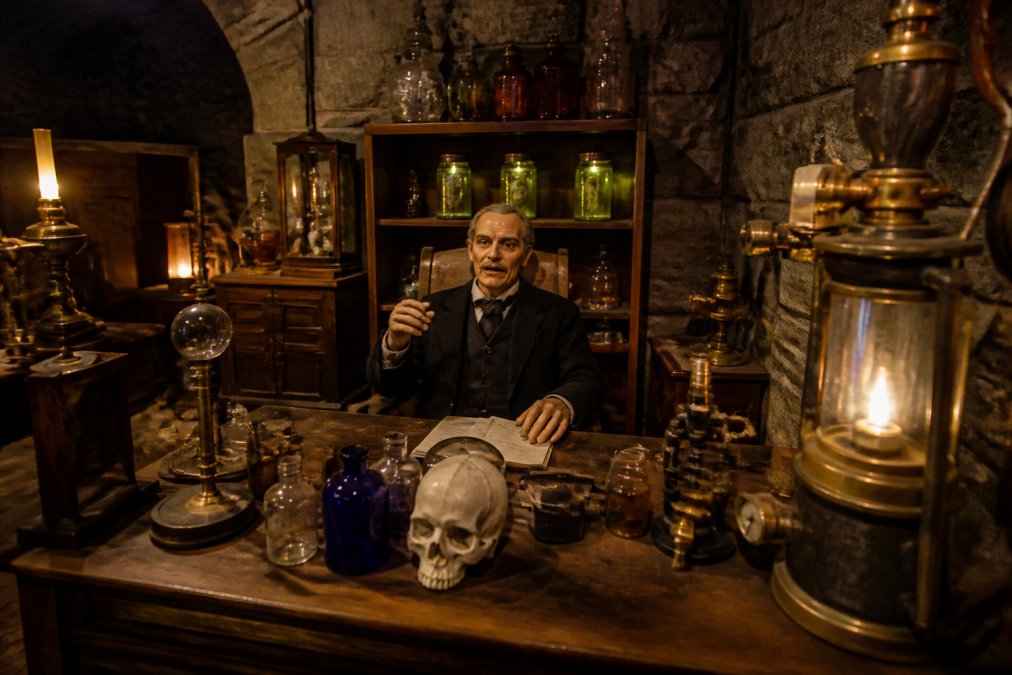
- Essential Escape Room Props and Animatronics for Full Immersion
- Designing for Accessibility and Inclusive Play
- How to Design Immersive Escape Rooms That Pass Playtesting
- Frequently Asked Questions
Last Updated: September 26, 2026
Start With a Narrative Arc, Not a Theme
The most common mistake in escape room construction is starting with a theme. "We want a Victorian asylum" is not a design; it's a mood board. Learning how to design immersive escape rooms starts with a narrative arc: a beginning, middle, and end players physically move through.
Mapping Your Three-Act Structure
Act one establishes the premise and teaches the rules. Act two escalates: puzzles get harder, the story twists, new areas open up. Act three resolves the arc with a final challenge and a clear ending.
Escape Room Puzzle Design Best Practices for Immersive Rooms
Escape room puzzle design best practices prioritize narrative integration over puzzle quantity. Every puzzle should advance the story or reveal character. A lock with no story behind it is just a lock; when a puzzle's solution teaches players about the world they're trapped in, the room becomes memorable.
- Every clue should have a narrative reason to exist
- Solutions should unlock story beats, not just doors
- Red herrings should mislead thematically, not randomly
- Physical tasks should reinforce the setting
The Puzzle Type Taxonomy
Before sequencing anything, categorize every puzzle by its primary interaction mode. Most rooms draw from six types:
- Combination and lock puzzles, the workhorse. Cheap, reliable, easy to reset. Use them for early wins, not climactic moments.
- Search-and-find, hidden compartments, UV reveals, magnetic keys. These reward exploration and teach players to touch the environment.
- Logic and deduction, ciphers, pattern matching, riddles. These create the "aha" moments players remember.
- Physical and dexterity, wiring tasks, magnetic fishing, weighted levers. These break up mental fatigue but must be accessible.
- Coordination puzzles, two players must act simultaneously in separate locations. These force communication and are the backbone of non-linear design.
- Narrative puzzles, the solution requires understanding the story. These are the hardest to design and the most memorable when they land.
Balancing Linear vs Non-Linear Puzzle Flow
Linear flow moves every team through the same sequence; non-linear flow lets players split up and tackle puzzles in any order. Linear design gives tight narrative control and predictable pacing, and it's easier to build, reset, and playtest. Non-linear design creates player agency and rewards cooperation, but it's harder to balance, teams can stall on one puzzle while another path sits untouched.
Sequencing: The Gating Mechanism
Sequencing controls when players access each puzzle. There are three gating methods, and most rooms use all three:
- Physical gating, a door, drawer, or panel that only opens after a prior puzzle is solved. Strongest control, most expensive to build.
- Information gating, the clue for puzzle B is hidden inside the solution to puzzle A. Cheap and elegant, but players can sometimes brute-force past it.
- Narrative gating, the story itself tells players where to go next. Most immersive but least reliable; players miss narrative cues constantly.
Building a Difficulty Curve That Keeps Players in Flow
The psychological flow state, where challenge matches skill, separates a good room from a great one. Too easy and players get bored; too hard and they shut down.
- Clear goals, players must always know what they're trying to accomplish, even if they don't know how.
- Immediate feedback, every interaction should produce a visible, audible, or tactile response. A lock that clicks, a light that changes, a drawer that opens.
- Challenge-skill balance, the difficulty curve must rise gradually, with no sudden spikes.
Hint Systems as Design Tools
Your hint system is a pacing tool, not an afterthought. A well-designed one lets you keep puzzles harder than you otherwise could, because players won't stay stuck indefinitely.
Three common hint delivery methods:
- On-demand hints, players request help via a button, screen, or walkie-talkie. Preserves agency but requires a game master watching every session.
- Timed hints, hints appear automatically after a set period. Reduces staffing needs but can interrupt flow if the timing is wrong.
- Tiered hints, the first hint nudges, the second clarifies, the third solves. The gold standard for player experience but requires the most preparation.
How to Write an Escape Room Script That Drives Player Agency
An escape room script is not a movie script. It's a framework for player-driven storytelling. The goal isn't to make players follow your plot; it's to give them enough context that their choices feel meaningful.
Essential Escape Room Props and Animatronics for Full Immersion
Budget-Conscious Prop Sourcing and DIY Options
Not every room needs custom animatronics. Smart designers mix high-impact hero pieces with affordable supporting props. The hero piece is what players describe to friends, spend your budget there and keep the rest simple.
Designing for Accessibility and Inclusive Play
Accessibility is not optional. A room that only works for able-bodied players under 40 excludes a huge share of your potential audience and creates real legal exposure. The Americans with Disabilities Act requirements for places of public accommodation apply to escape rooms just as they do to any other public venue.
Design for inclusive play from the start:
- Pathways wide enough for wheelchairs and mobility aids
- Puzzles solvable from a seated position
- Clues available in multiple formats (visual, audio, tactile)
- Lighting that doesn't rely solely on color contrast
- No reliance on standing, crawling, or reaching above shoulder height for critical solutions
How to Design Immersive Escape Rooms That Pass Playtesting
Playtesting is where your design holds up or falls apart. Run at least 20 test sessions before opening with players who've never seen the room, and watch without intervening. Every pause longer than 90 seconds is a signal; every confused glance at a prop is a note.
| Playtest Signal | Likely Cause | Fix |
|---|---|---|
| Teams finish too fast | Puzzles too simple | Add a step or deepen the clue |
| Teams time out early | Difficulty spike | Smooth the curve, add scaffolding |
| Hints cluster on one puzzle | Unclear clue or broken prop | Rewrite clue or replace prop |
| Players skip narrative details | Too many puzzles | Cut one, enrich the rest |
| Teams split and stall | Non-linear flow issue | Add a coordination puzzle |
The Playtest Protocol
A structured playtest is worth ten casual run-throughs. Most professional designers follow this protocol:
- Recruit for diversity. Test with groups of 2, 4, and 6, with experienced players and first-timers, and with at least one group including someone with a mobility aid.
- Brief the observers. Give watchers a checklist: where players paused, what they touched first, what they ignored, when they talked, when they went silent.
- Do not intervene. The hardest part is watching a team struggle without helping. Unless a prop is broken or someone is at risk of injury, stay silent.
- Debrief immediately. Ask what players remember, what confused them, and what they'd tell a friend. Their memory of the room matters more than completion time.
- Log everything. Keep a running document of every issue, session, and fix. Patterns emerge after 5 to 10 sessions.
Reset Procedures and Staffing
A room that takes 45 minutes to reset can't run back-to-back sessions. Build reset procedures into the design: magnetic locks, modular props, and labeled storage cut reset time dramatically. Aim for a 10 to 15 minute reset between teams.
Staffing considerations that affect design:
- If one game master runs multiple rooms, your reset must be fast and your hint system must be automated.
- If you run back-to-back sessions with no gap, you need duplicate props for anything that requires cleaning or recharging.
- If you operate with a single staff member overnight, your room needs remote monitoring and a lockout protocol.
Post-Launch Maintenance and Iteration
This is the part most guides skip, and it's where good rooms become great ones. A room is never finished on opening night. It's finished after 100 sessions of watching real players, taking notes, and making small changes.
Common post-launch issues and their fixes:
- A puzzle that consistently frustrates. Simplify it or improve the clue. If it still frustrates after two changes, cut it.
- A prop that keeps breaking. Replace it with something more durable, or redesign the puzzle to not depend on it.
- A narrative beat that players miss. Move it, amplify it, or make it a required step in a puzzle.
- A section that players rush through. Add a puzzle or a story moment that forces them to slow down.
- A hint that players never request. The puzzle is too easy. Make it harder or cut it.
The Maintenance Schedule
Every room needs a maintenance schedule, or small problems become session-ending failures.
- Daily: Visual inspection of all props, locks, and electronics. Test every lock and every trigger.
- Weekly: Deep clean of high-touch surfaces. Check battery levels on all wireless props. Test the hint system end-to-end.
- Monthly: Inspect wiring and connections. Test all emergency exits and lighting. Review session logs for patterns.
- Quarterly: Replace consumables (batteries, tape, paper props). Re-evaluate the difficulty curve based on completion data. Consider one small design change.
Iteration as a Design Philosophy
The best rooms evolve. A puzzle that worked in month one may need to change by month six as your audience shifts. New players bring new expectations. Returning players bring new strategies.
Frequently Asked Questions
How can I design my own escape room from scratch?
Start with a narrative arc, then map puzzles to story beats. Sketch your floor plan on grid paper, listing every prop and clue placement. Write a script that gives players clear objectives without over-explaining. Build a prototype with cardboard and household items before investing in permanent set pieces. Playtest with people who have never seen the room, watch where they get stuck, and revise. The whole process from concept to opening typically takes 8 to 16 weeks depending on complexity and budget.
What are the key elements of an immersive escape room experience?
Immersion relies on four pillars: thematic consistency across every prop and surface, sensory engagement through sound, smell, and lighting, puzzle flow that matches the narrative arc, and player agency so choices feel meaningful. Rooms that nail all four keep players talking about the experience for weeks. Missing even one pillar, such as a modern light switch in a Victorian laboratory, breaks the illusion and pulls players out of the story.
How do you balance narrative storytelling with game mechanics?
Treat the story as the why and the puzzles as the how. Every lock, cipher, or physical task should advance the narrative, not just block progress. If a puzzle exists only to fill time, cut it. Write your script first, then ask what action the player must take at each story beat. This keeps escape room puzzle design tight and prevents the common mistake of bolting a story onto unrelated mechanics.
What safety regulations must be considered when building escape rooms?
Escape rooms must comply with local building and fire codes, which in most U.S. jurisdictions means clearly marked exits, emergency lighting, and doors that open outward or have panic hardware. The Americans with Disabilities Act (ADA) requires accessible routes for players with mobility needs where feasible. Check with your city's fire marshal before construction. Also install emergency stop buttons for any animatronics or moving props, and keep fire extinguishers visible and unobstructed inside the room.
What is the hardest part of escape room design?
Playtesting consistently ranks as the hardest phase. Designers know their own puzzles too well to predict where players will struggle. Watching a group miss an obvious clue or breeze through a puzzle you thought was difficult forces rewrites. Budget two to three full playtest cycles with fresh groups before opening. Each cycle typically reveals at least one broken puzzle, one unclear instruction, and one prop that does not survive contact with players.
How do I choose the right animatronics and props for my escape room?
Match props to your narrative arc, not to what looks scariest on a product page. A steampunk laboratory needs brass instruments, bubbling vessels, and mechanical animatronics, while a gothic manor calls for candlelit portraits and hidden compartments. Prioritize pieces that react to player actions, such as a prop that triggers when a drawer opens, because interactivity deepens immersion more than static decoration. Source from specialty horror prop makers when you need narrative depth and durability.
How long does it take to design and build an escape room?
A single-room build typically takes 8 to 16 weeks from concept to opening. The first two weeks cover narrative and puzzle design, weeks three through eight handle construction and prop sourcing, and weeks nine through twelve focus on playtesting and revisions. Custom animatronics or specialized set pieces can add two to four weeks. If you need custom props on a tight timeline, ask your supplier about rush production before you commit to an opening date.